Dehumidifiers: Do You Need One for Your Home?
Humidity can sneak into your home like fog rolling in at dawn—silent, persistent, and hard to ignore once it settles. If you've ever felt clammy even with the AC humming, or caught a whiff of musty air in the hallway, you might be living with more moisture than you bargained for.
At Best Indy HVAC, we’ve seen firsthand how high humidity affects families and businesses. It’s not just about comfort. It’s about health, safety, and protecting your biggest investment: your property.
Signs You Need a Dehumidifier 🕵️
How do you know if your home or business is too humid? There are telltale signs you can’t ignore:
- Musty Odors: That damp, basement-like smell means moisture is feeding mildew or mold.
- Visible Mold: Dark or fuzzy patches on walls, ceilings, or around windows point to excess humidity.
- Condensation: Water droplets on windows, pipes, or walls are like red flags for moisture issues.
- Warped Wood or Peeling Paint: Floors, doors, and window frames can swell, stick, or crack when humidity is high.
- Allergy Flare-Ups: Dust mites and mold thrive in moist air, making allergies and asthma worse.
- Sticky Air: If your home feels muggy even when the AC is running, the air probably holds too much moisture.
If you’re seeing two or more of these signs, it’s time to think about a solution.
Why High Humidity Is a Health Risk
High humidity isn’t just annoying—it can be dangerous. Mold spores, which love damp spaces, are linked to asthma attacks and respiratory problems according to the Centers for Disease Control and Prevention (CDC). Children, elderly people, and anyone with breathing conditions are especially at risk.
Moist air also lets dust mites thrive. These tiny bugs are a leading cause of indoor allergies. According to the Environmental Protection Agency (EPA), keeping humidity below 60% (ideally 30–50%) can help control both mold and mites.
How Dehumidifiers Work: The Basics
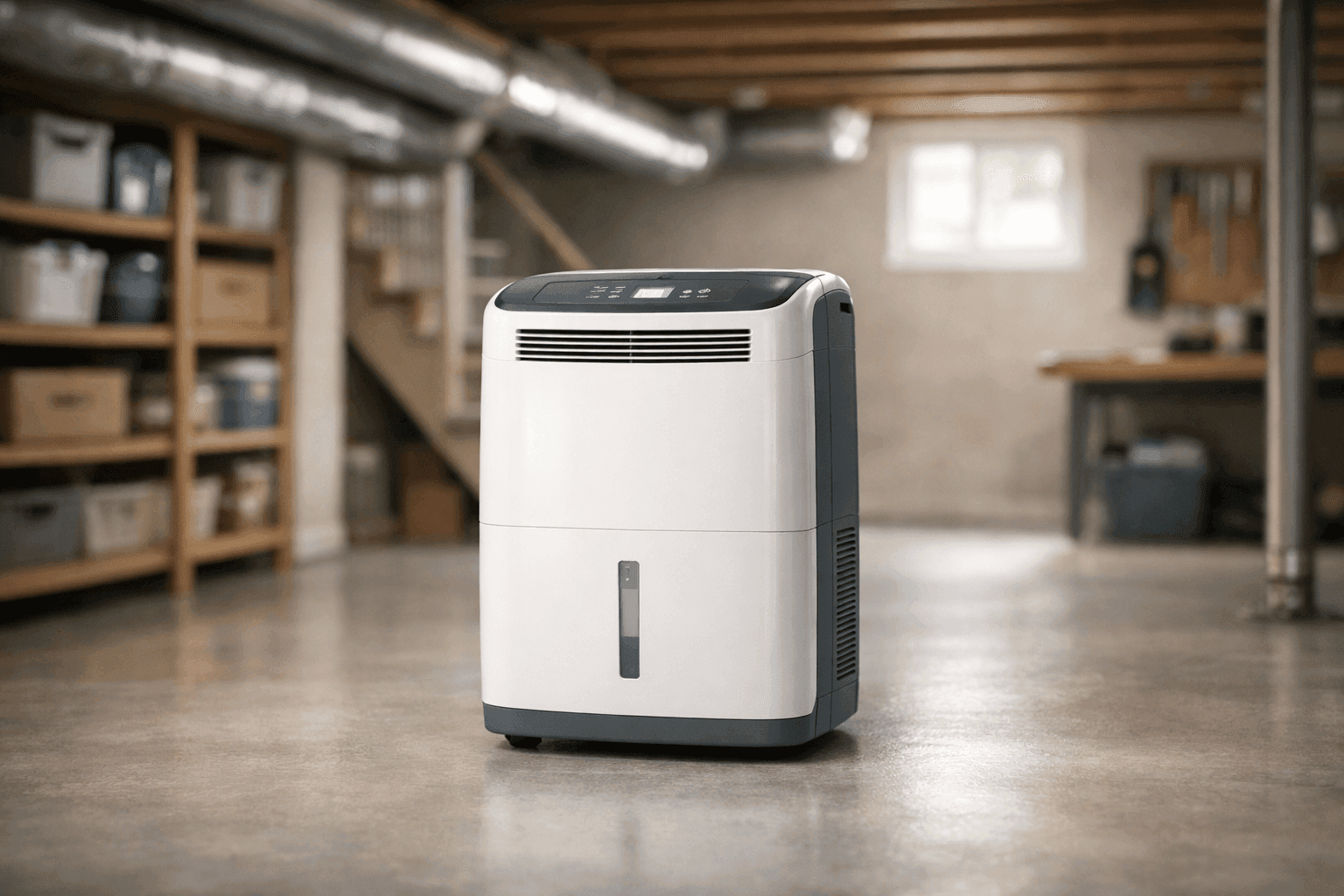
Think of a dehumidifier as a sponge with a fan. It pulls in moist air, cools it so water condenses out, collects that water in a tank (or drains it away), and then blows drier air back into your space. The result? Air that feels fresher and less sticky.
There are two main types:
- Portable Dehumidifiers: Good for basements, bedrooms, or problem areas.
- Whole-House Dehumidifiers: Installed in your HVAC system, these tackle moisture throughout your entire home.
Choosing the Right Dehumidifier for Your Needs
Size matters. A dehumidifier that’s too small will run forever and never catch up. Too big, and it may waste energy or dry the air out.
Sizing Tips:
- Measure the Space: Square footage is step one.
- Check Moisture Level: More moisture = bigger capacity needed (measured in pints per day).
- Consider Use: Basements and bathrooms need more power than bedrooms or offices.
ASHRAE (the American Society of Heating, Refrigerating, and Air-Conditioning Engineers) sets standards for dehumidifier sizing. As a rule of thumb, a 1,000 sq. ft. damp basement needs a 14–18 pint unit; a very wet space might need 20–30 pints or more.
Not sure what you need? Our dehumidifiers experts are happy to help.
Where to Place Your Dehumidifier
Placement is key. Think of moisture like a river—it pools in the lowest, darkest spots. Basements, crawl spaces, or rooms with poor airflow are the usual suspects.
Quick tips:
- Place units at least 6 inches from walls for good air circulation.
- Keep doors and windows closed for best results.
- For whole-house models, trust your HVAC contractor to find the ideal spot.
Maintenance: Keep Your Dehumidifier Working Its Best 🛠️
Like any tool, a dehumidifier needs care:
- Empty the Water Tank: Some models can drain automatically, but most portable units need to be emptied regularly.
- Clean the Filter: Dust and debris clog filters fast—check monthly.
- Check the Coils: Dirty coils mean less moisture removal and higher energy bills.
- Inspect Hoses: For whole-house units or continuous drain setups, make sure hoses are clear and leak-free.
- Schedule HVAC Maintenance: At least yearly, have a pro inspect your system, especially if your dehumidifier ties into your indoor air quality system.
A clean, well-maintained dehumidifier lasts longer and works better.
DIY vs. Call a Pro
It’s tempting to grab a dehumidifier from the hardware store and plug it in. For small rooms, that works. But for stubborn moisture, recurring mold, or whole-home issues, a professional HVAC contractor is your best bet.
Why? We measure humidity using calibrated instruments, hunt for hidden leaks or insulation gaps, and can recommend permanent solutions—sometimes it’s not just about adding a gadget. It could be ductwork, ventilation, or even a Humidifiers if your air gets too dry.
What to Expect When the Pros Arrive
Here’s what our team does on a typical visit:
- Inspect: We check for visible mold, leaks, or moisture traps.
- Measure: Using digital hygrometers, we track your home’s humidity levels.
- Test Air Quality: We look for airborne mold, dust, and other irritants.
- Recommend: We suggest the right size and type of dehumidifier—or other fixes if needed.
- Install & Set Up: We handle placement, settings, and show you how to use and maintain your new system.
We always follow code and manufacturer guidelines, so your equipment runs safely and efficiently.
Cost and Time: What’s Involved?
- Portable Units: $150–$350 for most home models. Expect to spend 10–20 minutes a week on emptying and cleaning.
- Whole-House Units: $1,200–$2,800 installed, depending on size and features. These require annual HVAC check-ups.
- Professional Assessment: A home energy audit can take 1–2 hours and pays for itself in lower energy bills and fewer repairs.
Ask about energy rebates—some states offer incentives for IAQ improvements.
When Is High Humidity an Emergency?
Some moisture problems just can’t wait:
- Rapid mold growth after flooding.
- Standing water in crawl spaces.
- Allergies or asthma suddenly getting worse.
In these cases, call for 24-hour emergency hvac services. Fast action prevents long-term damage and health risks.
Common Mistakes to Avoid
- Ignoring the Signs: If you see mold or smell mildew, don’t wait.
- Wrong Size: An undersized dehumidifier won’t keep up. Oversized units waste energy.
- Poor Placement: Tucking a unit in the corner behind boxes blocks airflow.
- Skipping Maintenance: Dirty filters and full tanks mean your dehumidifier is barely working.
- Not Addressing the Cause: Sometimes, the problem is a leak or poor ventilation. Fix root causes, not just symptoms.
Seasonal Considerations
Humidity isn’t just a summer issue. Spring rains, fall dampness, and even winter (in some climates) can lead to moisture trouble. Keep an eye on indoor humidity year-round. A well-tuned HVAC system helps balance moisture as seasons change.
Air Quality Data: What’s “Healthy” Humidity?
According to the EPA, indoor relative humidity should stay between 30% and 50%. This range limits mold, dust mites, and bacteria. Too low? Add a Humidifiers. Too high? A dehumidifier is your best friend.
If you’re in the area, our team in Huber Heights can provide a full humidity and air quality assessment. Learn more about our Indoor Air Quality solutions for homes and businesses in hvac.
Frequently Asked Questions
Q: Will a dehumidifier lower my energy bills?
A: Yes. Drier air feels cooler, so you may run your AC less.
Q: Can I use the water collected?
A: No. Dehumidifier water isn’t safe to drink, but plants might appreciate it.
Q: Is it noisy?
A: Most units hum quietly, but check decibel ratings if you’re sensitive to noise.
Q: How do I know it’s working?
A: Use a hygrometer to check humidity levels. If moisture drops and odors fade, it’s doing its job.
Next Steps: Is a Dehumidifier Right for You?
If you’ve spotted signs of high humidity, don’t wait for mold to move in. The right dehumidifier can help protect your health, comfort, and property. Whether you need a portable fix or a whole-home solution, Best Indy HVAC is here to help you breathe easier.
Call Best Indy HVAC now — or reach us anytime at 855-525-5859 .