Ductless vs Ducted HVAC: What’s the Difference?
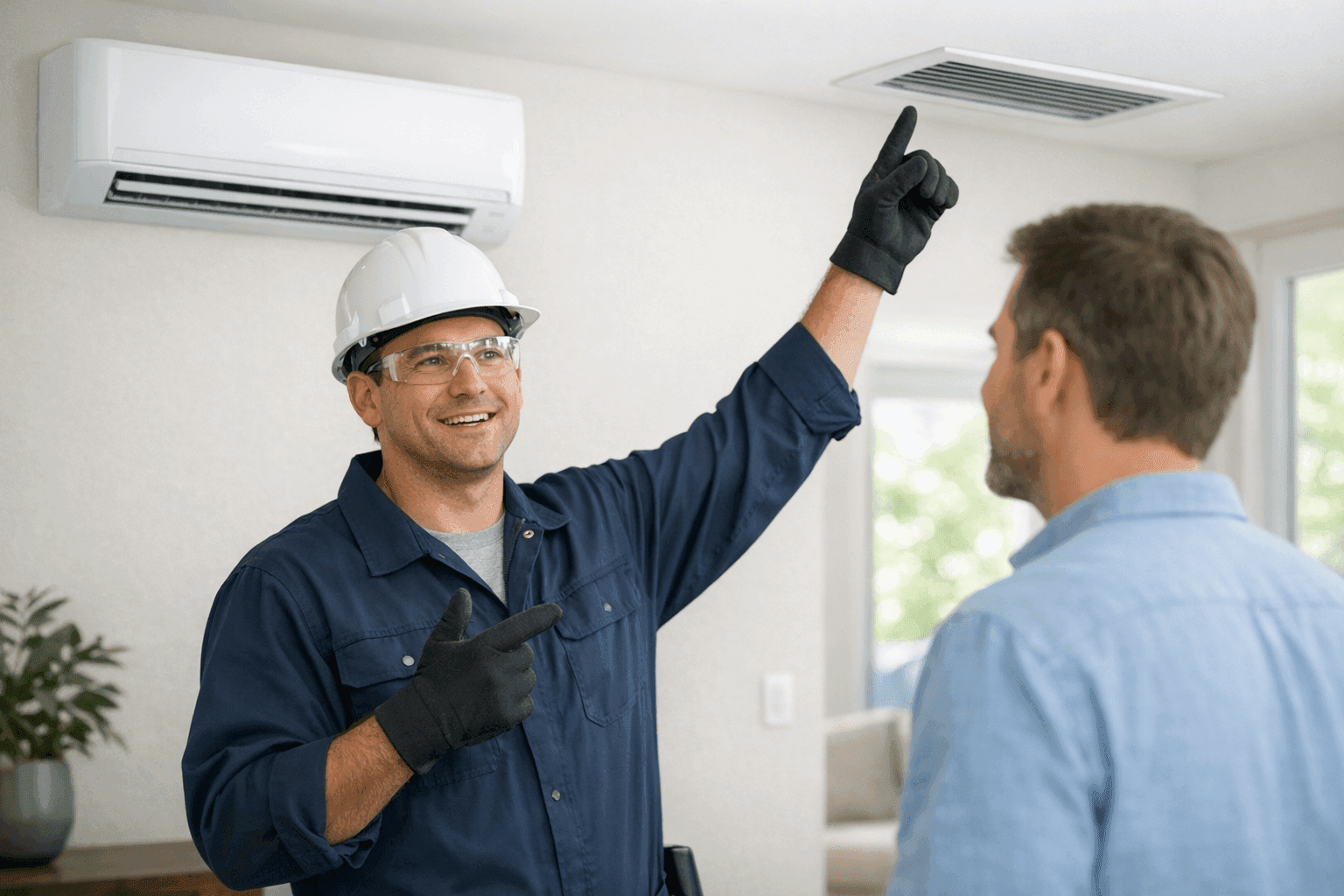
Two Paths to Comfort: Ductless vs Ducted HVAC
Walk into any home or business, and the air just feels right—or it doesn’t. That’s the magic (or misery) of a well-designed HVAC system. When it’s time to replace, upgrade, or build from scratch, you’re likely to hear two big terms: ductless and ducted.
But what’s the real difference? Is one more efficient, less expensive, or easier to live with? At Best Indy HVAC, we help folks sort through these choices every day. Let’s break down both options with real-world examples, so you can make the best call for your space.
What Is a Ducted HVAC System?
Imagine your home as a set of lungs. In a ducted HVAC setup, air moves through “arteries”—the ducts—hidden in walls, floors, and ceilings. One big unit (like a furnace or central air conditioner) pulls in air, heats or cools it, then pushes it through these ducts to every room.
- Most common in traditional homes and offices.
- Works with forced air furnaces, central AC, and even some Geothermal systems.
- Often installed during construction or major remodels, since ducts are tricky to add later.
What Is a Ductless HVAC System?
Now, picture a set of mini engines—each one quietly humming away in its own room. That’s ductless. Also called “mini-splits,” these systems have indoor air handling units in each space, connected to an outdoor compressor.
- No ducts. Each unit operates independently.
- Perfect for additions, sunrooms, garages, or anywhere ducts would be a headache.
- Popular for energy efficiency and easy installation.
Main Differences at a Glance
- Ductwork: Ducted needs them; ductless skips them.
- Installation: Ducted is a big project, ductless is quick.
- Control: Ductless gives you room-by-room control.
- Aesthetics: Ducted is invisible; ductless units mount on walls or ceilings.
- Energy: Ductless often wins for efficiency, but modern ducted systems can compete.
Pros and Cons: Ducted HVAC Systems
Pros
- Uniform comfort: Every room gets the same temperature, like a well-baked cake.
- Discreet: All hardware is out of sight.
- Works with existing infrastructure: Ideal for buildings with ducts already in place.
- Compatible with advanced filtration: Supports whole-house air scrubbers and advanced filters.
Cons
- Installation disruption: Adding ducts to a finished space is messy and expensive.
- Energy loss: Leaky ducts can waste 20–30% of conditioned air, according to the U.S. Department of Energy.
- Maintenance: Ducts need regular cleaning to prevent dust, mold, or allergens.
Pros and Cons: Ductless HVAC Systems
Pros
- Flexible zoning: Heat or cool only the rooms you use. Save money and energy.
- Quick installation: Most setups are done in a day or two.
- High efficiency: No ducts means little air loss.
- Great for renovations: Perfect when adding new rooms or improving older spaces.
Cons
- Visible indoor units: Some find the look less appealing.
- Initial cost per room: More expensive if you need to cover lots of spaces.
- Maintenance: Each unit has its own filter to clean and service.
Installation: What to Expect
Ducted Systems
- Timeline: Can take several days to weeks, especially if ductwork is needed.
- Disruption: Expect drywall repair, ceiling work, and some dust.
- Equipment: Large indoor units, ducts, grilles, thermostat.
Ductless Systems
- Timeline: Typically 1–2 days.
- Disruption: Minimal—just a small hole for wiring and refrigerant lines.
- Equipment: Outdoor compressor, indoor air handlers, remote controls.
Cost Comparison: Upfront and Long-Term
- Ducted: Higher installation cost if new ducts are needed. Lower per-room cost in large spaces.
- Ductless: Lower installation cost if no ducts exist, but higher per room/unit. More efficient—may save on energy bills.
- Maintenance: Ducted systems need duct cleaning; ductless units require filter cleaning for each unit.
Always get a professional HVAC estimate before making decisions. Energy rebates may be available for both systems. Check the local code and Energy Star guidelines for updates.
Performance: Heating, Cooling, and Air Quality
- Ducted: Excellent for whole-building comfort. Works well with air scrubbers, humidifiers, and dehumidifiers.
- Ductless: Great for targeted comfort and quick response. Newer models offer impressive filtration, but may not match the power of a full-house system.
Want to go green? Both types can work with Geothermal near you for maximum energy savings.
When to Choose Ducted HVAC
- Building new or gut-renovating.
- Replacing an old central system.
- Wanting invisible hardware and consistent temps.
- Need advanced whole-house air quality solutions.
When to Choose Ductless HVAC
- No ductwork exists and adding it is impractical.
- Renovating a single room or area.
- Need independent control for different spaces (offices, rental units).
- Wanting a quick, minimally invasive installation.
Maintenance: Keeping Each System in Top Shape 🧰
Ducted System Maintenance
- Annual professional inspection.
- Duct cleaning every 3–5 years.
- Filter changes every 1–3 months.
- Watch for leaks, blockages, or dust buildup.
Ductless System Maintenance
- Clean or replace filters monthly.
- Professional annual checkup for refrigerant and electrical parts.
- Keep outdoor compressor clear of debris.
Neglected maintenance can mean higher bills and lower air quality. See the EPA’s indoor air quality guidelines for more.
Upgrading: Can You Switch from One to the Other?
Yes, but it’s not always simple. Switching from ducted to ductless usually means capping or removing old ducts and wiring new lines. Upgrading from ductless to ducted is a much bigger job—often only done during major renovations.
A professional evaluation helps you weigh costs, disruption, and the best fit for your goals. Sometimes, a hybrid approach (using both systems) makes sense—especially in larger homes or growing businesses.
Real-World Scenarios
- Older home, no ducts: Ductless shines. Fast, clean, and efficient.
- Busy office with uneven temps: Ducted with air balancing and zoning can solve hot/cold spots.
- Home addition or remodel: Ductless is often the least disruptive choice.
- Health concerns: Ducted systems with advanced filters and air scrubbers can dramatically improve indoor air quality.
Energy Efficiency Tips
- Seal and insulate ducts in ducted systems.
- Keep filters clean—clogged filters hike up costs.
- Consider programmable thermostats for both types.
- Ask about high-efficiency heat pumps and Geothermal options.
Safety First: Checklist for Any HVAC System
- Only certified professionals should install or modify HVAC equipment.
- Always check local codes and building permits.
- For commercial spaces, follow OSHA and ASHRAE standards.
- Don’t block vents or indoor units with furniture or curtains.
Avoid These Common Mistakes
- Skipping professional load calculations (guesswork leads to the wrong size system).
- Overlooking duct leaks in older buildings.
- Forgetting to clean filters—leads to poor air flow and higher bills.
- Installing ductless units in spaces without enough wall or ceiling support.
Is It an Emergency?
- No heating or cooling in extreme weather: call for 24-hour emergency service.
- Strange smells (burning, chemical): shut down and get help—could be a safety issue.
- Water leaks or ice buildup: act fast to prevent damage.
Frequently Asked Questions
Can I use both ducted and ductless in one building?
Absolutely. Many homes and offices mix systems for efficiency and control.
Which is quieter?
Both can be quiet, but ductless usually keeps the noise outside.
Do either systems work with smart thermostats?
Yes—many modern ductless and ducted systems integrate with smart controls.
What about air quality?
Both can improve air quality, especially when paired with filters, air scrubbers, or dehumidifiers.
The Bottom Line: Which Should You Choose?
There’s no “one size fits all.” Your building’s age, layout, comfort goals, and budget all play a role. At Best Indy HVAC, we help homeowners and businesses weigh every angle—from energy savings to aesthetics—so you get a solution you’ll love for years.
Ready to talk options, see real-world examples, or schedule a professional evaluation?
Call Best Indy HVAC now — or reach us anytime at 855-525-5859 .