HVAC Safety: Preventing Fires, Leaks & Hazards
Why HVAC Safety Matters—Every Single Day
Every home and business relies on safe, reliable heating and cooling. But even the best HVAC system can become a hazard if ignored. A tiny gas leak. A frayed wire. One missed inspection, and suddenly, the comfort you count on can turn risky. At Best Indy HVAC, we know safety isn’t just a checklist. It’s how you protect your family, your staff, and your investment.
Whether you’re running a geothermal near you or managing a classic furnace, the risks are real. Fires, leaks, and electrical mishaps don’t make appointments—they show up when least expected. Knowing the warning signs and when to call a pro could make all the difference.
Spotting the Most Common HVAC Hazards 🔥
Let’s break down the most common dangers:
- Electrical Hazards: Loose wires spark. Overloaded circuits can overheat and catch fire.
- Gas Leaks: Natural gas or propane leaks aren’t just smelly—they’re explosive.
- Carbon Monoxide: This silent, invisible gas can leak from furnaces and boilers. It’s deadly.
- Water Leaks: Condensate drain issues or cracked lines can lead to mold and structural damage.
- Blocked Vents: Poor airflow means heat builds up, creating fire risks and suffocation hazards.
The U.S. Fire Administration and NFPA both report thousands of fires each year started by faulty HVAC equipment. It’s not rare—it’s real.
The Quick HVAC Safety Checklist
Give your home or business a five-minute safety scan:
- Smell rotten eggs or sulfur? That’s a gas leak—leave and call for help.
- Hear buzzing, crackling, or popping from your system? Turn it off.
- See water pooling near your furnace or AC? It’s not normal.
- Vents blowing weak or not at all? Could mean blockage or motor failure.
- Soot or scorch marks? Danger—call a pro.
If you check any of these boxes, it’s time to take action.
Warning Signs: When Your HVAC Is Asking for Help
Sometimes your system whispers before it screams:
- Short cycling: System turns off and on rapidly.
- Strange odors: Burnt, metallic, or chemical smells.
- Unusual sounds: Grinding, hissing, or loud clanking.
- High utility bills: Means something’s working harder than it should.
- Hot or cold spots: Indicates airflow or duct problems.
Don’t ignore these signals. They’re your system’s SOS.
DIY or Call a Pro? Knowing Your Limits
Changing a filter? Go for it. Resetting a tripped breaker? Sure. But anything involving gas, wiring, or deep mechanical parts? That’s a job for licensed HVAC specialists. Tinkering without training can void warranties—and put you at risk.
If in doubt, always err on the side of caution. Even one wrong move with gas lines or electrical boards can end in disaster.
What the Pros Do When They Arrive
When our techs walk in, they’re detectives—trained to spot trouble others miss. Here’s what happens:
- Full safety inspection of electrical, gas, and venting systems.
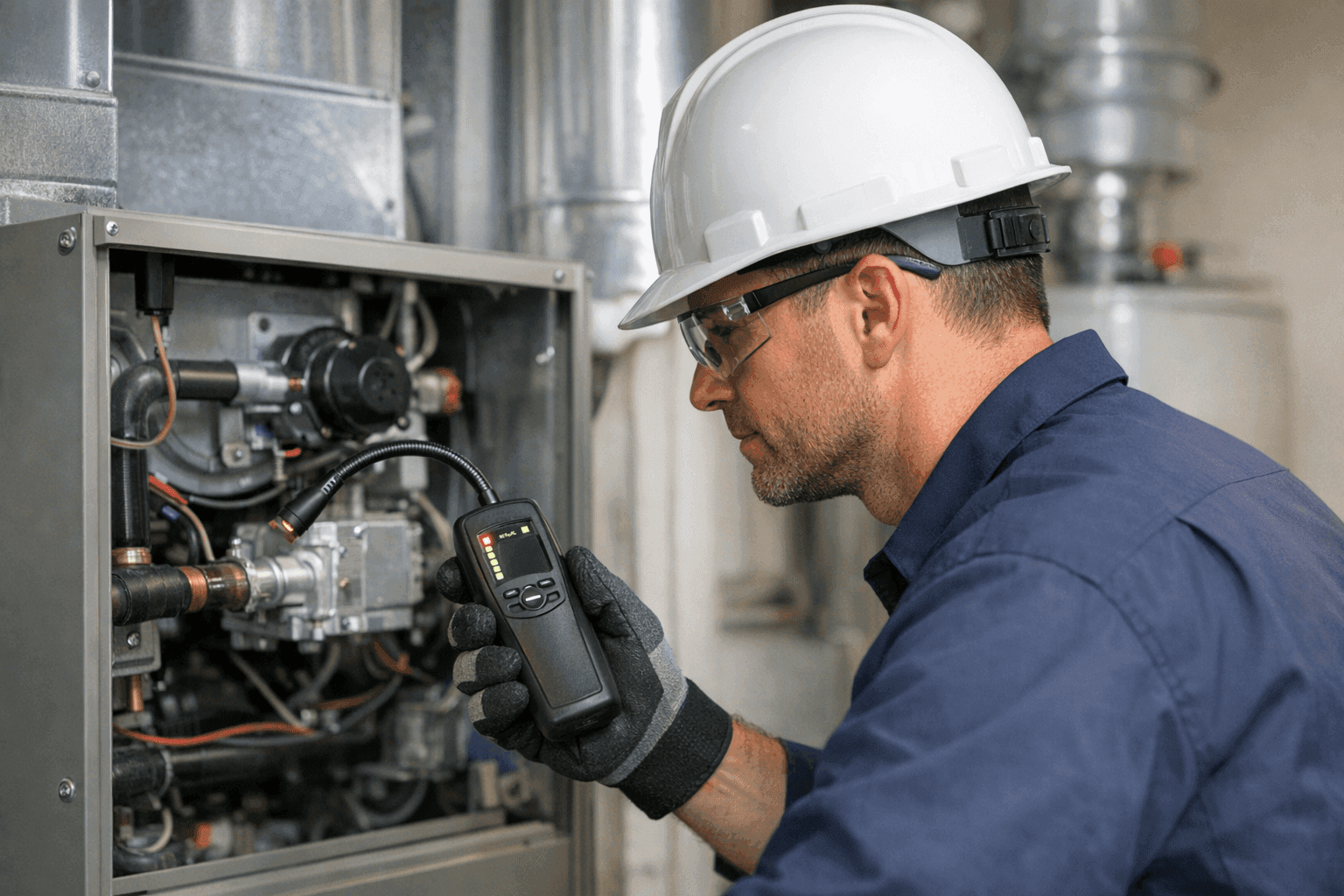
- Carbon monoxide testing with calibrated detectors.
- Tightening connections and checking for code compliance.
- Inspecting heat exchangers, ignition systems, and safety shutoffs.
- Airflow and vent checks to prevent blockages.
We use tools like gas leak detectors, manometers, and thermal cameras—many required by safety standards like the International Mechanical Code (IMC) and National Electrical Code (NEC).
Preventive Maintenance: The Best Defense
A little prevention saves a world of trouble:
- Schedule annual tune-ups—especially before winter or heavy summer use.
- Change filters every 1-3 months.
- Clean vents and ducts to keep air moving safely.
- Test smoke and CO detectors twice a year.
- Keep outdoor units clear of debris, leaves, and clutter.
For those using advanced systems like geothermal, routine checks keep things running safely and efficiently.
Safety Devices You Should Never Skip
Modern HVAC systems come with a lineup of silent guardians:
- Carbon Monoxide Detectors: Required by law in many areas.
- Flame Sensors: Shut off the gas if no flame is detected.
- Pressure Switches: Prevent operation if unsafe conditions are detected.
- High-Limit Switches: Turn off the furnace if it gets too hot.
- Drainage Sensors: Alert you to water leaks or blockages.
If any of these fail, the risk skyrockets. That’s why regular professional checks are critical.
Code Compliance: Safety Isn’t Optional
HVAC safety is backed by the force of law. Building codes exist for a reason. They cover:
- Minimum clearance distances for furnaces and water heaters.
- Proper vent pipe materials and installation.
- Electrical grounding and circuit protection.
- Safe fuel line routing.
The International Residential Code (IRC), International Building Code (IBC), and local regulations are there to keep you safe. Cutting corners isn’t just risky—it could make insurance claims impossible after an incident.
When Is It an Emergency?
Some problems can’t wait:
- You smell gas or suspect a leak—get out and call emergency services.
- Carbon monoxide detector is alarming—evacuate immediately.
- Electrical sparks, burning smells, or visible flames—call 911, then a pro.
- No heat in freezing weather—especially for vulnerable populations.
Don’t wait until “business hours.” Best Indy HVAC offers 24-hour emergency service because hazards don’t wait.
Seasonal Safety Tips: Stay Ahead of Trouble
- Spring: Check for winter damage. Have ducts cleaned and filters changed.
- Summer: Clear AC condensate lines, check outdoor units for debris.
- Fall: Test heating systems early, check for blockages in vent pipes.
- Winter: Listen for unusual sounds, monitor for ice or snow blocking vents.
Each season brings new risks. Stay ahead by planning preventive maintenance.
Mistakes That Invite Danger
- Blocking vents with furniture or storage.
- Using extension cords for permanent power.
- Ignoring loud or unusual noises.
- Skipping routine maintenance to “save money.”
- DIY repairs on gas or high-voltage parts.
These shortcuts can cost more than they save. Play it safe.
Costs, Time, and Disruption: What to Expect
Worried about downtime or the bill? Most safety checks and repairs are fast—often under two hours. Costs depend on the issue, but catching problems early is always cheaper than dealing with fire or water damage later.
Larger jobs—like replacing a cracked heat exchanger or rewiring a system—take longer. But with regular checkups, catastrophic fixes are rare.
FAQ: Common HVAC Safety Questions
How often should I have my HVAC system inspected?
- At least once a year for most systems. Twice for older or heavily used equipment.
Are carbon monoxide detectors really necessary?
- Yes. They save lives. Install one on every floor.
What if I have a geothermal system?
- Geothermal near you is extremely safe, but annual checks are vital to ensure loops, pumps, and controls are operating leak-free.
Can I clean ducts myself?
- Light vent dusting is fine. Deep cleaning should be done by pros with proper equipment.
Air Quality and Safety: The Overlap
Safety isn’t just about fire and gas. Poor air quality can harm your health, too. Dust, mold, and chemical fumes can build up in neglected systems. Air scrubbers, proper filters, and regular Geothermal all help keep your air (and your family) healthy.
Recognizing When to Call a Professional
- Any sign of gas or burning smells.
- Unexplained headaches, dizziness, or nausea in your home or business.
- Repeated circuit breaker trips.
- Water near your furnace or AC.
- HVAC system won’t turn on, or cycles erratically.
If you’re in doubt, don’t risk it. hvac contractor resources are always available when you need expert help.
The Bottom Line: Safety Starts with Awareness
HVAC safety isn’t about fear—it’s about being proactive. Like a seatbelt, the steps you take now can protect what matters most. Don’t wait for a scare to take action.
Call Best Indy HVAC now — or reach us anytime at 855-525-5859 .