MERV, HEPA, and Carbon Filters: What’s the Difference?
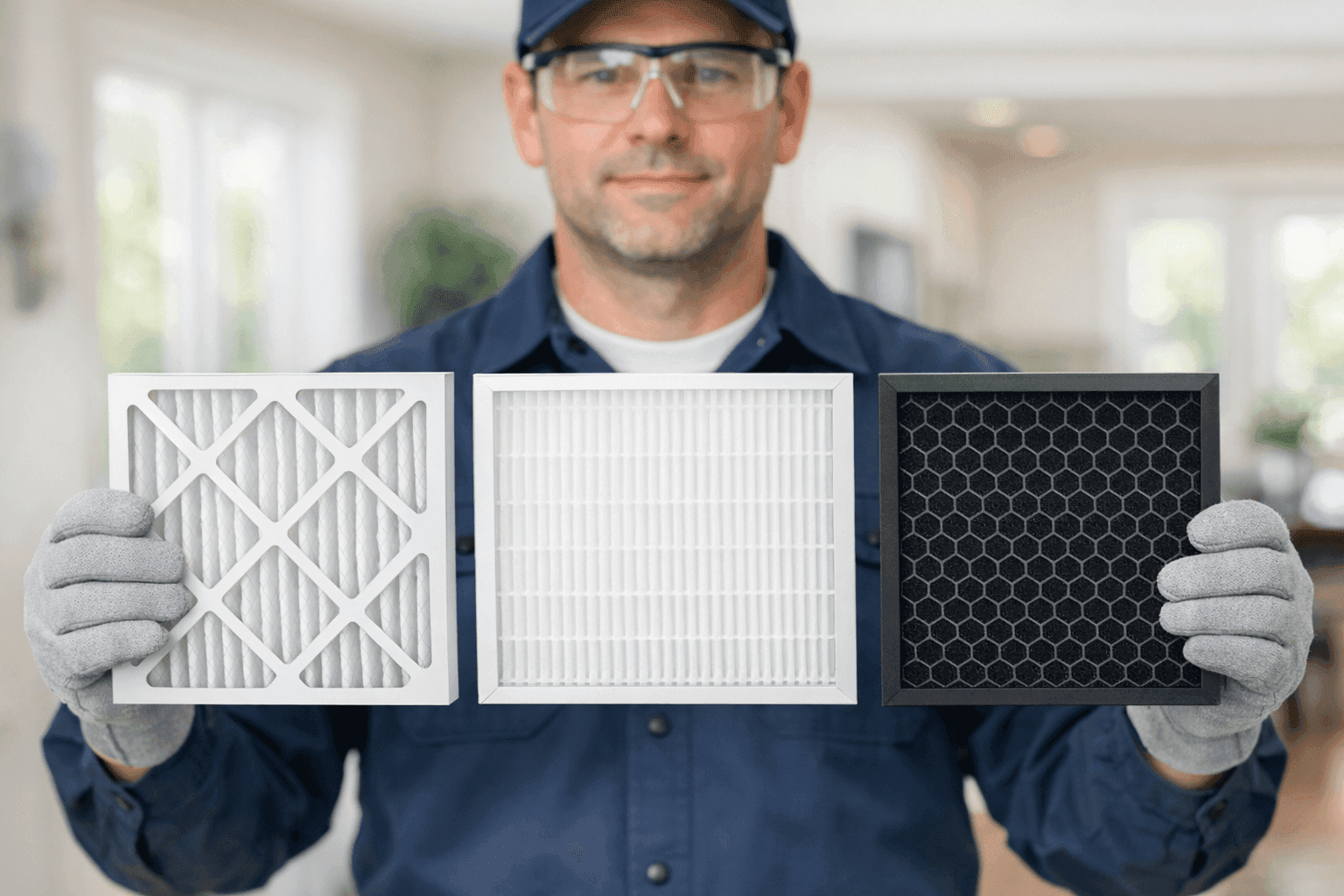
Breathing easy starts with the right filter. But with so many options—MERV, HEPA, carbon—how do you know what’s best for your home or business? At Best Indy HVAC, we help people cut through the confusion every day.
A good filter means less dust, fewer allergens, and a healthier indoor space. But the wrong filter can choke your system, drive up energy bills, or do nothing at all. Let’s break down the differences so you can make the smartest choice for your HVAC.
What Does Each Filter Type Actually Do? 🤔
Every filter has a job. Some target dust. Others go after odors or microscopic threats. Here’s how they work:
- MERV Filters: Block common dust, pollen, pet dander.
- HEPA Filters: Grab tiny particles, including some bacteria and viruses.
- Carbon Filters: Trap chemicals, smoke, and odors.
Think of MERV as a colander, HEPA as a fine-mesh sieve, and carbon as a sponge for smells.
How MERV Filters Work
MERV stands for “Minimum Efficiency Reporting Value.” The number (usually 1–16 for residential; up to 20 for specialty use) tells you how well the filter catches particles.
- Low MERV (1-4): Stops big stuff—dust bunnies, carpet fuzz.
- Mid MERV (5-8): Blocks mold spores, pet dander.
- High MERV (9-13): Catches even smaller particles—some bacteria, finer dust.
- Very High MERV (14-16): Used in hospitals or labs.
Most homes do just fine with a MERV 8–13 filter. Too high, and your system can struggle to “breathe.”
What MERV Filters Remove
These filters tackle:
- Dust
- Pollen
- Mold spores
- Pet dander
- Some bacteria (with higher MERV ratings)
But they don’t remove odors or gases.
Maintenance and Costs: MERV Filters
- Replacement interval: Every 1–3 months, depending on use and air quality.
- Cost: $5 to $25 each, with higher ratings costing more.
- DIY friendly: Most homeowners can replace these in minutes.
If you’re running your system hard or have pets, check filters often. A clogged filter makes your hvac work harder, which can lead to breakdowns.
When Should You Use a MERV Filter?
- Standard residential and commercial HVAC systems
- People with mild allergies
- Folks wanting a balance of air flow and filtration
If you’re not sure what your system can handle, check your manual or ask a pro.
How HEPA Filters Work
HEPA stands for “High-Efficiency Particulate Air.” These are the gold standard for capturing tiny stuff—down to 0.3 microns (that’s about 300 times smaller than a human hair).
- Required to capture at least 99.97% of particles that size.
- Used in clean rooms, hospitals, and some higher-end home air purifiers.
But beware: Most home HVAC systems can’t handle a true HEPA filter without special modifications.
What HEPA Filters Remove
HEPA is your shield against:
- Fine dust
- Smoke particles
- Bacteria
- Some viruses
- Pollen
- Pet dander
They’re not great for odors or chemical fumes.
Maintenance and Costs: HEPA Filters
- Replacement interval: Every 6–12 months (can vary; check the manual).
- Cost: $30–$120+ each, depending on size and type.
- Special installation: Often need custom housing or bypass systems.
HEPA filters are serious business. They can slow air flow and even damage your furnace or AC if not installed properly. Always consult a certified hvac contractor for upgrades.
When Should You Use a HEPA Filter?
- Severe allergies or respiratory issues
- Spaces that need hospital-grade cleanliness
- If your system is designed for it (or can be upgraded safely)
For most homes, a high-MERV filter is more practical. But if you need HEPA, it pays to do it right.
How Carbon Filters Work
Activated carbon filters are like the charcoal in your water pitcher. Instead of catching particles, they soak up chemicals and odors.
- Filled with porous carbon that traps volatile organic compounds (VOCs), smoke, and smells.
- Work best when paired with a MERV or HEPA filter for dust and allergens.
What Carbon Filters Remove
These filters target:
- Cooking odors
- Smoke (tobacco, wildfire)
- Chemical fumes (paint, cleaning supplies)
- Gases (like formaldehyde)
But they don’t do much for dust or pollen.
Maintenance and Costs: Carbon Filters
- Replacement interval: 3–6 months for most; can be less in smoky or high-odor environments.
- Cost: $10–$70+ each.
- Check air flow: Carbon can clog quickly if overloaded—pay attention to smells or musty air.
If you notice lingering odors, it’s time for a swap.
When Should You Use a Carbon Filter?
- Homes or businesses with smoke or chemical odor problems
- Allergy or asthma sufferers sensitive to smells
- Kitchens, salons, or workshops
Remember: Carbon is not a substitute for dust or allergen removal. It’s a partner, not a solo act.
Quick Safety Checklist Before Changing Filters 🛠️
- Turn off your HVAC system before removing panels.
- Wear gloves and a mask if you’re sensitive to dust or mold.
- Check fit and direction—filters have arrows for a reason.
- Seal used filters in a bag before tossing to keep dust down.
If you’re not sure, call a professional. Safety first.
DIY vs. Call a Pro: Filter Upgrades
Changing a standard MERV filter? Most folks can handle it.
But:
- Installing HEPA or carbon upgrades in a central hvac system
- Dealing with persistent odors or allergies
- Unsure about your system’s capabilities
Call in a certified technician. Some upgrades require duct modifications or electrical work. According to the EPA, improper installation can reduce efficiency and even pose health risks.
What a Professional Will Do On Arrival
- Inspect your current filters and ductwork
- Check air flow and static pressure
- Recommend the right filter for your needs and system
- Install upgrades safely, following local and national codes
This keeps your system running safely and efficiently.
Prevention & Maintenance: Keeping Air Clean Year-Round
- Change filters on schedule—set reminders in your phone.
- Keep return vents clear of furniture and dust.
- Consider a yearly home energy audit to spot bigger air quality issues.
- Schedule regular hvac maintenance to keep everything running smoothly.
A little planning means a lot less hassle (and cleaner air).
Costs & Time: What to Expect
- MERV filters: Quick swap, low cost.
- HEPA or carbon upgrades: More time and money, but deeper results.
- Professional install: Usually done in 1–3 hours, unless your system needs major changes.
Budget for both the filter and any labor. And remember, quality filters can save you money by protecting your system.
When Air Quality Becomes an Emergency
Call for immediate help if:
- You smell burning or chemical odors from vents.
- There’s visible mold or soot inside your system.
- Someone in your home has sudden severe breathing problems.
Best Indy HVAC offers 24 hour emergency service—because sometimes, waiting isn’t an option.
Signs It’s Time to Change Your Filter
Don’t wait until air flow drops or allergies spike. Look for:
- Visible dust on vents or furniture
- A musty or stale smell inside
- Increased allergy symptoms
- Higher energy bills with no obvious cause
Set a reminder for every season—or more often if you have pets or live in a dusty area.
Common Filter Mistakes (And How to Avoid Them)
- Buying the wrong size—measure your old filter first!
- Installing backwards—check the arrow.
- Skipping changes—set a calendar alert.
- Going too high with MERV—if your system can’t handle it, you’ll lose efficiency.
Need help? Our hvac company page has more info for your area.
FAQ: Your Filter Questions, Answered
Q: Can I use a HEPA filter in my regular furnace?
A: Not without modifications. Most systems aren’t designed for that level of restriction.
Q: How often should I change my filter?
A: MERV every 1–3 months; HEPA and carbon every 3–12 months, depending on use.
Q: Is a carbon filter enough for allergies?
A: No. Pair it with a MERV or HEPA filter for best results.
Q: Are there official recommendations?
A: The American Society of Heating, Refrigerating and Air-Conditioning Engineers (ASHRAE) recommends MERV 13 or higher for most homes, if your system can handle it.
Matching the Filter to Your Needs
- Basic dust and pollen: MERV 8–13
- Severe allergies or medical needs: HEPA (with pro install)
- Odors and fumes: Carbon (with MERV or HEPA)
Every home and business is different. Climate, pets, allergies, and building age all play a role. Don’t be afraid to ask questions.
The Bottom Line: Clean Air, Happy System
The right filter makes all the difference. Whether you need a basic dust blocker or a heavy-duty odor solution, matching the filter to your needs—and your system—keeps air clean and equipment running strong.
For personalized advice or help upgrading your filters, Call Best Indy HVAC now — or reach us anytime at 855-525-5859 .