Portable vs Whole-House Dehumidifiers: Pros & Cons
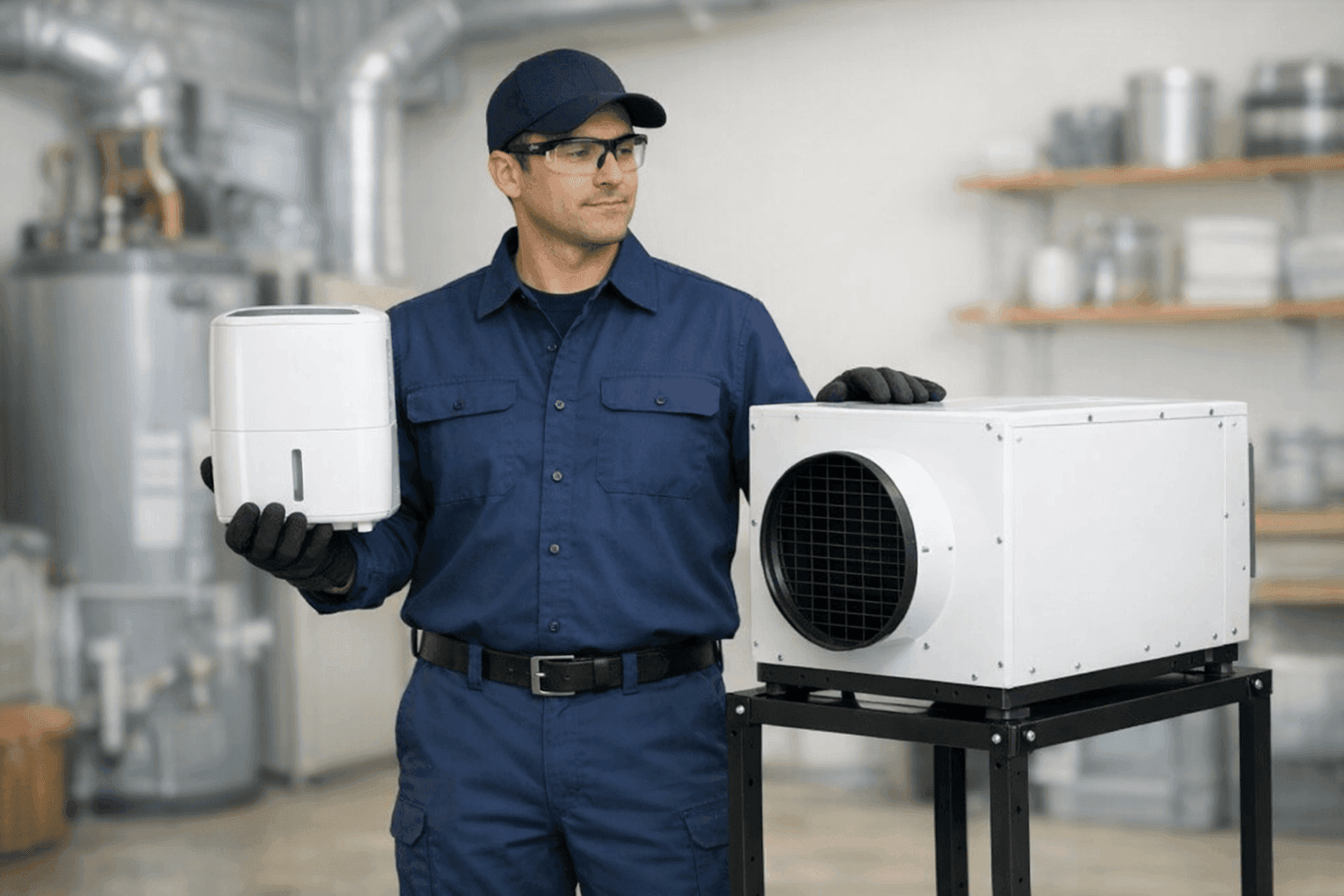
Humidity sneaks up on you. One day, your home or business feels cool and fresh. The next, you’re peeling your shirt off the back of your chair and your paperwork is curling at the edges. Unchecked moisture isn’t just uncomfortable. It can damage property, trigger allergies, and even harm your HVAC system.
Best Indy HVAC has helped countless families and businesses tackle the sticky issue of indoor humidity. Let’s dig deep into portable versus whole-house dehumidifiers—their strengths, weaknesses, and what works best where you live, work, and breathe.
Breaking Down the Basics: What Do Dehumidifiers Really Do? 🌦️
Dehumidifiers pull excess moisture from the air. That’s it at the core. But the way they do it—and how much air they treat—varies a lot.
Think of a portable dehumidifier as a trusty umbrella: easy to grab, covers a single zone, and keeps you dry in a pinch. Whole-house systems are more like a raincoat that covers your entire body, every room, every time you step outside.
Both fight excess humidity, but in very different ways.
Key Differences: Portable vs Whole-House at a Glance
- Coverage: Portables work in one room or space. Whole-house units connect to your HVAC and tackle every corner.
- Installation: Portables are plug-and-play. Whole-house models need professional installation.
- Capacity: Portables remove pints per day. Whole-house models can pull out gallons.
- Upkeep: Portable units need frequent emptying and cleaning. Whole-house systems tie into your drains and require less babysitting.
Pros & Cons: Portable Dehumidifiers
The Upside
- Affordable upfront cost
- Simple to move from room to room
- Great for spot issues—think basements, attics, or after a leak
The Downside
- Limited coverage (one room at a time)
- Can be noisy in quiet spaces
- Tanks fill up fast—daily emptying is common
- Adds to your energy bill for each unit in use
Portable units are perfect for small jobs. They’re fast, flexible, and don’t need a pro to set up.
Pros & Cons: Whole-House Dehumidifiers
The Upside
- Treats the entire building, not just one spot
- Lower maintenance—drainage is automatic
- Integrates with your HVAC for smooth, silent comfort
- Can improve air quality and support your AC’s efficiency
The Downside
- Higher upfront investment
- Requires professional installation and occasional service
- Not as portable—once installed, it stays put
When humidity is a whole-home or business-wide problem, these systems are the gold standard.
Performance: Which Dehumidifier Packs More Punch?
Performance comes down to coverage and capacity. Portable models usually pull 20–70 pints out of the air per day, depending on size. Whole-house units? They can remove 90–150 pints (or more) daily, distributed everywhere your ducts reach.
The EPA recommends keeping indoor humidity between 30% and 50%. If you’re fighting mildew, musty smells, or condensation throughout your home or commercial space, a portable model will struggle to keep up.
Installation: Simple Plug-In or Professional Setup?
Portable Units
- Set on the floor, plug into a standard outlet
- Position near problem zones (windows, bathrooms, or damp walls)
- No tools or professional skills needed
Whole-House Units
- Installed directly into your HVAC’s ductwork or air handler
- Needs a drain line to remove water automatically
- Requires a skilled HVAC technician
According to the International Residential Code (IRC), dehumidifiers tied to HVAC must meet drainage and electrical safety standards. That’s not a DIY job.
Maintenance: What Should You Expect?
Portable Units
- Daily: Empty the water tank (unless you attach a hose)
- Weekly: Clean filters and check for dust or mold
- Monthly: Inspect coils for frost, especially in cooler spaces
Whole-House Units
- Quarterly: Check and clean filters
- Yearly: Schedule a professional inspection with your HVAC maintenance
- Ongoing: Ensure the drain line stays clear (no standing water or clogs)
A quick tip: Always unplug portable dehumidifiers before cleaning. For whole-house units, leave deep cleaning and repairs to licensed pros.
Ideal Use Cases: Where Each Shines
- Portable: Basements, guest rooms, storage areas, or temporary moisture issues (like after a spill or flood)
- Whole-House: Large homes, open floorplans, commercial spaces, or buildings with year-round humidity issues
A portable unit is your quick fix. Whole-house systems solve big, persistent problems.
Common Mistakes with Dehumidifiers—and How to Dodge Them
- Placing a portable unit too close to walls or furniture (blocks airflow)
- Ignoring filter changes (leads to poor performance)
- Oversizing or undersizing your unit (wastes energy or leaves moisture behind)
- Skipping regular checks for leaks or pests in drain lines
If you’re unsure about sizing, ask your HVAC technician to perform a home energy audit or humidity assessment.
Seasonal Considerations: When Does Humidity Strike?
Humidity usually spikes in spring and summer, but basements can stay damp year-round. Heating systems in winter can dry air out too much—so balance is key. Whole-house dehumidifiers can work in all seasons, adjusting automatically. Portables need you to keep an eye on indoor humidity and move them as needed.
Cost Factors: Purchase, Operation, and Longevity 💡
- Portable Units: $150–$500 upfront, plus $30–$100 yearly for filters and energy
- Whole-House Units: $1,200–$2,500 installed, with $50–$200 annual maintenance
Whole-house models last longer—often 7–10 years or more, compared to 3–5 years for many portable units (especially if they run nonstop). Energy Star rates both types, so look for certified models for lower bills.
DIY vs. Calling a Pro: Where to Draw the Line
Plugging in a portable unit? Go for it. But if you’re thinking about a whole-house system—especially if you want it integrated with your existing HVAC—it’s time to call in the professionals. Proper sizing, drainage, and code compliance are non-negotiable.
For those who want a deeper dive into system sizing and humidity control, the U.S. Environmental Protection Agency (EPA) and American Society of Heating, Refrigerating and Air-Conditioning Engineers (ASHRAE) provide excellent guidance.
Quick Safety Checklist Before You Start
- Make sure outlets can handle the unit’s wattage
- Keep cords clear of walking paths to prevent trips
- Regularly inspect for leaks, rust, or odors
- Never block vents or air intakes
For whole-house systems, always double-check with a licensed HVAC company before any DIY work.
When Is It an Emergency?
Sometimes, excess moisture isn’t just about comfort. If you spot black mold, puddles forming, or hear your AC struggling, it’s time to act fast. Mold can set in within 24–48 hours after a leak, and water damage can lead to costly repairs.
Best Indy HVAC offers Dehumidifiers—because some problems just can’t wait.
Air Quality, Health, and Comfort: What’s at Stake?
High humidity fuels mold, dust mites, and bacteria. It can worsen asthma and allergies. Whole-house dehumidifiers, especially when paired with Dehumidifiers and high-quality filters, create a healthier environment. For commercial spaces, this can mean fewer sick days and better productivity.
Timeline & Disruption: What to Expect During Installation
- Portable: Ready in minutes, with minimal noise or mess.
- Whole-House: Installation can take a few hours to a day. There may be some minor disruption—access to ductwork, some drilling, and testing. Most people are surprised how quickly things are back to normal.
Frequently Asked Questions
Will a portable dehumidifier solve my whole-home problem?
Not likely. They’re built for small spaces. For larger areas, a whole-house system is much more effective.
Can I install a whole-house dehumidifier myself?
It’s best left to professionals. Code compliance, drainage, and electrical safety matter.
How do I know if my home is too humid?
Condensation on windows, musty smells, and sticky air are big red flags. A hygrometer (humidity meter) gives you hard numbers.
Real-World Scenarios: Picking the Right Solution
- You own a small shop and just need the storeroom dry? Go portable.
- You’re a property manager for an apartment complex? Whole-house dehumidification reduces maintenance calls and tenant complaints.
- Family keeps sneezing at night, or you notice peeling paint? Time for a system-wide fix.
For broader HVAC needs, you can always look for hvac specialists in Birmingham for comprehensive solutions.
Professional Recommendations: What Would We Do?
At Best Indy HVAC, we never push one-size-fits-all. We listen, assess, and recommend what fits your space, lifestyle, and budget. Sometimes, the answer is a mix—portable in targeted zones, whole-house for peace of mind everywhere else.
When in doubt, have a pro check your humidity levels and inspect your HVAC. A little prevention saves a lot of headaches.
Call Best Indy HVAC now — or reach us anytime at 855-525-5859 .