Thermostat Troubles: When to Repair or Replace
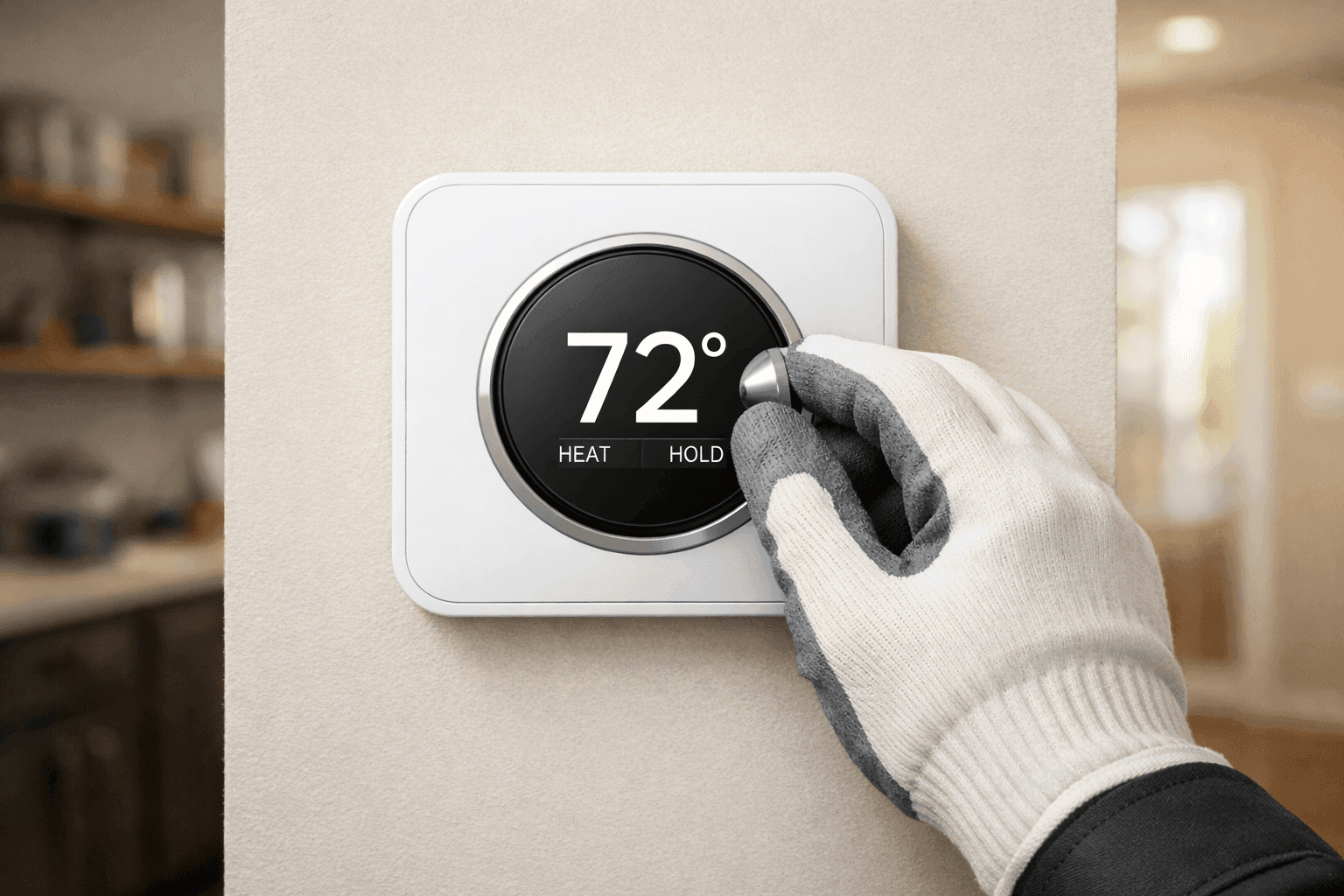
Does your home suddenly feel like a sauna—or an icebox—no matter what your thermostat says? You're not alone. Thermostat problems sneak up on even the most careful homeowners and business managers. At Best Indy HVAC, we know how quickly comfort can slip away when your thermostat isn't pulling its weight.
A faulty thermostat can waste energy, rack up bills, and leave you guessing about your system’s health. Let’s break down what’s fixable, what’s not, and when a simple upgrade can save you money (and headaches).
Common Thermostat Problems
Thermostats are like the brain of your HVAC system. When they act up, everything else does too. Here are some of the usual suspects:
- Inaccurate temperature readings: The room feels colder or warmer than the number on the display.
- No response: You press the buttons, but nothing happens. Or the display is blank.
- Short cycling: The HVAC system turns on and off rapidly, never finishing a full heating or cooling cycle.
- Random temperature swings: It’s 72°F one moment, then suddenly 68°F, with no outside reason.
- Unusual noises: Clicking, buzzing, or other odd sounds coming from the thermostat itself.
These problems can be frustrating—like driving a car with a foggy windshield. You’re never sure what’s coming next.
Quick Safety Checklist 🛑
Before you roll up your sleeves, safety comes first. Thermostats run on low voltage but can still pose risks.
- Turn off power at the breaker before removing the thermostat cover.
- Double-check for exposed wires. If you see anything frayed or scorched, stop and call a professional.
- Never force the thermostat housing open.
- If your thermostat is part of a larger smart home system, check the manufacturer’s guidelines before attempting any troubleshooting.
For more, see the U.S. Consumer Product Safety Commission guidelines.
Simple DIY Checks Before You Call
Sometimes, the fix is easier than you think. Try these before reaching for the phone:
- Change the batteries: Dead batteries are a common culprit.
- Clean up dust: Gently brush away dust inside the thermostat with a soft brush.
- Check the settings: Make sure it’s not accidentally set to “fan only,” “off,” or “hold.”
- Verify the location: Thermostats near windows, ovens, or direct sunlight can read temperatures incorrectly.
- Tighten wire connections: Loose wires can disrupt communication with your HVAC system.
- Reset the thermostat: Many models have a reset function—consult your manual.
If these steps don’t restore comfort, it’s time to dig deeper.
Signs It’s Time for a Repair
Some issues can be fixed without replacing the whole unit. Look for these repair-worthy symptoms:
- Buttons or touchscreens not responding: Often a wiring or contact issue.
- Temperature drift: Minor calibration or sensor replacement may solve it.
- Short cycling: Could be caused by a miswired thermostat or simple setting error.
A qualified technician can quickly test circuits, calibrate sensors, and get things running again. If your thermostat is less than 7 years old, repair is often the best and most cost-effective choice.
When to Replace Your Thermostat
Thermostats don’t last forever. Here’s when replacement is smarter than repair:
- Age: Most thermostats are reliable for about 7–10 years. After that, components wear out.
- Compatibility: Upgrading your HVAC system (adding Geothermal near you or a heat pump)? Your old thermostat may not speak the same language.
- Frequent breakdowns: If it’s always something, stop patching and start fresh.
- Missing features: Want programmable schedules, remote control, or energy reports? Old units can’t deliver.
- No parts available: For some older models, parts just aren’t made anymore.
If you’re facing several of these issues, replacement usually wins on cost and convenience.
Repair or Replace? A Real-World Cost Comparison
- Repair Costs: Most thermostat repairs run $75–$200, depending on the issue and parts.
- Replacement Costs: Basic programmable thermostats start around $150–$250 (installed). Smart thermostats with Wi-Fi, learning features, or zoning run $250–$500+.
If repair costs approach half the price of a new unit—or if you’re missing out on features you want—it’s time to upgrade.
What a Professional Does on Arrival
Curious what happens when you call in Best Indy HVAC? Here’s our standard process:
- Inspect the thermostat's power and wiring.
- Test the sensor accuracy with a calibrated thermometer.
- Run the HVAC system through all cycles to spot short cycling or no-response problems.
- Advise on code compliance and system compatibility (especially for commercial clients).
- Explain findings in plain language—so you can make an informed decision.
Smart Upgrades: The Modern Thermostat Advantage 🏡
Today’s smart thermostats are more than temperature knobs. They’re the central hub for comfort and energy savings.
Benefits include:
- Remote control: Adjust settings from your phone, tablet, or even voice assistant.
- Energy reports: See how much you’re saving each month.
- Automatic learning: Some models learn your schedule and adjust automatically.
- Zoning support: Fine-tune temperatures in different parts of your home or business.
- Better indoor air quality: Some even work with air scrubbers, dehumidifiers, or air balancing systems.
A smart thermostat can help you save up to 10% per year on heating and cooling, according to the Department of Energy.
Seasonal Considerations
Thermostats work hardest during Indiana’s temperature swings. Spring and fall are perfect times to check performance—before extreme heat or cold hits. Schedule maintenance or an upgrade before you’re relying on your system 24/7.
Common Mistakes to Avoid
- Ignoring small problems: A sticky button today becomes a dead display tomorrow.
- DIY wiring without guidance: One wrong connection can damage your HVAC system.
- Wrong thermostat for the system: Not all thermostats work with every HVAC setup, especially specialty units like Geothermal near you.
How to Prevent Thermostat Trouble
- Change batteries every year (or whenever you change your clocks).
- Keep the unit dust-free.
- Schedule regular HVAC maintenance to catch minor issues early. Learn more about our HVAC Maintenance service.
- Upgrade if you’re renovating or installing a new HVAC system.
When It’s an Emergency 🚨
If your thermostat fails during a heatwave or freeze, and your system won’t run, call for 24-hour emergency service—especially for commercial clients or households with vulnerable occupants.
What to Expect During Replacement
- Power will be off for about 30–60 minutes.
- Minimal disruption—our team works clean and fast.
- We’ll test the system and walk you through new features.
- Old thermostats are disposed of per local guidelines.
FAQ: Your Thermostat Questions Answered
How do I know if my thermostat is the problem, not my HVAC system? If your display is blank, unresponsive, or the temperature readings are off, suspect the thermostat. If the HVAC system won’t respond to manual override, it’s also a sign.
Can I install a smart thermostat myself? If you’re comfortable with basic wiring and can follow instructions, yes. But if you have a multi-stage system, heat pump, or Geothermal near you, professional installation is safest.
Will a new thermostat lower my bills? Yes—especially programmable and smart models. They help avoid wasted heating and cooling.
Which Service to Choose
Not sure if you need repair, replacement, or a full system check? Our team can help with everything from thermostats and hvac-repair to ac-repair and advanced upgrades.
Check out our hvac company services in Portland if you’re looking for reliable, local support.
Ready for Comfort & Control?
Don’t let a stubborn thermostat call the shots in your home or business. Whether you need a quick fix or a smart upgrade, Best Indy HVAC is here to help.
Call Best Indy HVAC now — or reach us anytime at 855-525-5859 .